
Water that finally
feels like water.
Delhi's borewell water averages 700–1,500 ppm TDS. We bring it below 100 — and you'll notice the difference the first morning.
Priya Malhotra
Vasant Kunj, Sector C
South Delhi
TDS Before
847
ppm
TDS After
68
ppm
"Pehle towels cardboard jaise the. Ab hotel jaisa feel hai."
Hover to feel the ripple
FAQ 01
Why does Delhi water leave white spots on everything?
Delhi's groundwater — especially in areas like Burari, Ashok Vihar, and Dwarka — carries 700–1,500 ppm of dissolved solids, mostly calcium and magnesium carbonates. When water evaporates, these minerals are left behind as that familiar white crust.
The same deposits coating your shower head are silently narrowing your geyser's heating element, your RO filter's pre-membrane, and your washing machine's inlet valve — until one day they don't work anymore.
Tested TDS — Delhi NCR Localities
BIS safe limit: 500 ppm · WHO recommended: 300 ppm
Cross-Section: Pipe After 2 Years of Hard Water
New Pipe — Full Flow
After 1 Year — Scale Forming
After 3 Years — Critical Blockage
With Soften — Stays Clear
Geysers last 2× longer
Scale on heating elements is the #1 cause of geyser failure in Delhi
Live TDS Reading — Soften Install
FAQ 02
Is soft water safe? Won't removing minerals be harmful?
Fair question — and one that stops a lot of Delhi families. The short answer: yes, completely safe, because a water softener doesn't touch your drinking water.
Soften connects to your main supply line before your geyser, washing machine, and bathrooms. Your kitchen tap and RO unit stay on the original line. You drink the same water as before. Your appliances and skin get the softened version.
The WHO does caution against drinking demineralised water regularly. We agree — which is why we never touch the drinking line.
Drinking line untouched
Kitchen tap and RO stay on original supply
Softer skin, no more dryness
Hard water strips natural oils — soft water doesn't
BIS & WHO compliant install
Every Soften setup follows Bureau of Indian Standards guidelines
No form. Just enter your colony name and get a quote.
FAQ 03
My building runs on borewell. Will this even work?
Yes — and borewell water is exactly why Soften exists. Delhi's borewells, especially in Dwarka, Rohini, and parts of Gurgaon, regularly test at 1,200–2,000 ppm TDS. Municipal supply in areas like Burari hits 1,500 ppm. Our ion-exchange resin handles both.
The resin bed captures calcium and magnesium ions and releases sodium in exchange. It doesn't care whether your water comes from a borewell, a municipal tanker, or mixed supply — it treats the hardness regardless of source.
Hard water enters the resin tank
Calcium and magnesium ions attach to resin beads
Ion exchange happens instantly
Na⁺ ions replace Ca²⁺ and Mg²⁺ — no electricity needed
Soft water exits to your building
Geyser, washing machine, showers — all protected
Resin regenerates with salt
Once a week, brine flushes the resin back to full capacity
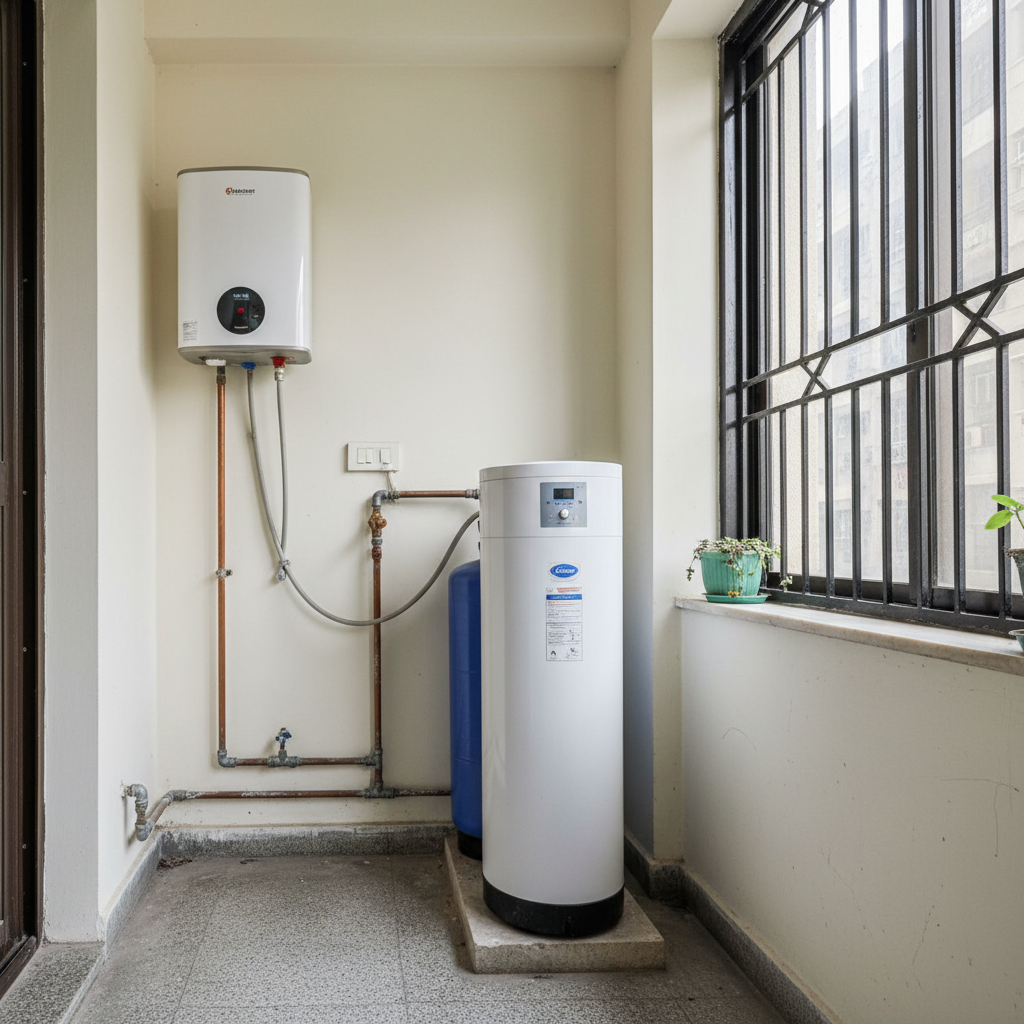
Typical Install
Utility Balcony, Dwarka Sec 12
2.5 hours · No wall drilling required
Borewell TDS
1,340
→ 82 ppm after
FAQ 04
How much salt will I use — and what does it actually cost monthly?
A 3-bathroom Delhi home at 1,000 ppm inlet TDS uses roughly 5–7 kg of salt per month. At ₹6–8 per kg for standard water-softener salt, that's ₹30–56 per month — less than a cup of coffee.
Compare that to the actual cost of not softening: a geyser replacement in Delhi runs ₹7,000–12,000 every 2–3 years. A washing machine drum replacement: ₹4,000–6,000. An RO membrane that clogs in 6 months instead of 18: ₹1,200 each time. Soften pays for itself before the first monsoon.
Check Softener for Your AreaArea-specific pricing. No hidden AMC traps.
Annual Cost Comparison — 3 BHK, South Delhi
Without Soften (per year)
Geyser descaling / replacement
every year
RO membrane replacement ×3
every 6 months
Washing machine service
annual
Showerhead replacements ×2
annual
Total Hard Water Tax
₹12,100With Soften (per year)
Salt top-up (5 kg/month)
₹40/month avg
Annual resin check
included in plan
Annual Running Cost
₹480Save ₹11,620 / year
System pays for itself in under 18 months